Our Blessings
Personal Priestly Blessings from the Holy Land for people of faith
Health
Healing, vitality, and lasting wellness of body and soul, lifted in the Priestly Blessing from the Land of Israel.
Family
The Lord’s protection, unity, and peace over your home and every generation, in the spirit of the ancient Priestly Blessing.
Success
Clarity, divine guidance, and victory in every endeavor you pursue, lifted by Kohanim at Israel’s most sacred sites.
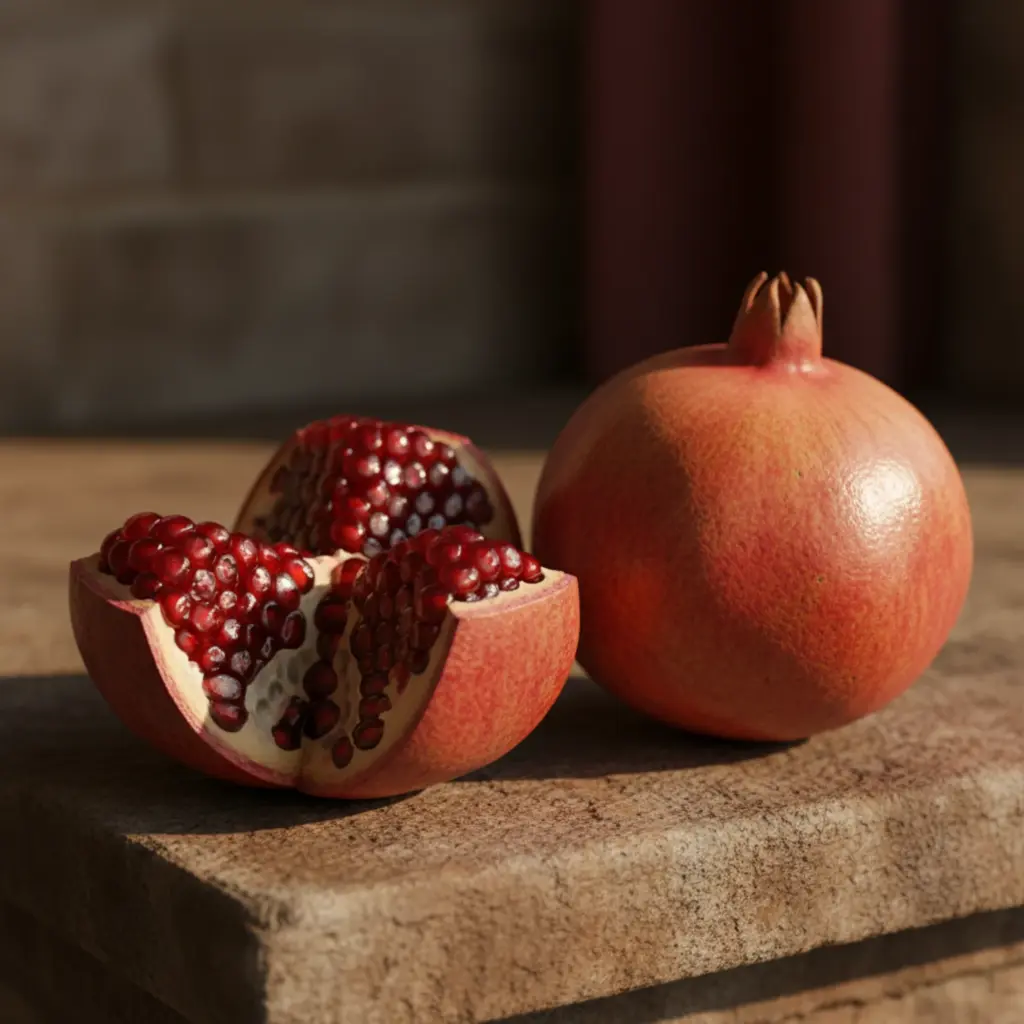
Marriage
Bonding souls in love, patience, and lasting covenant – blessed from the land where covenants were first proclaimed.
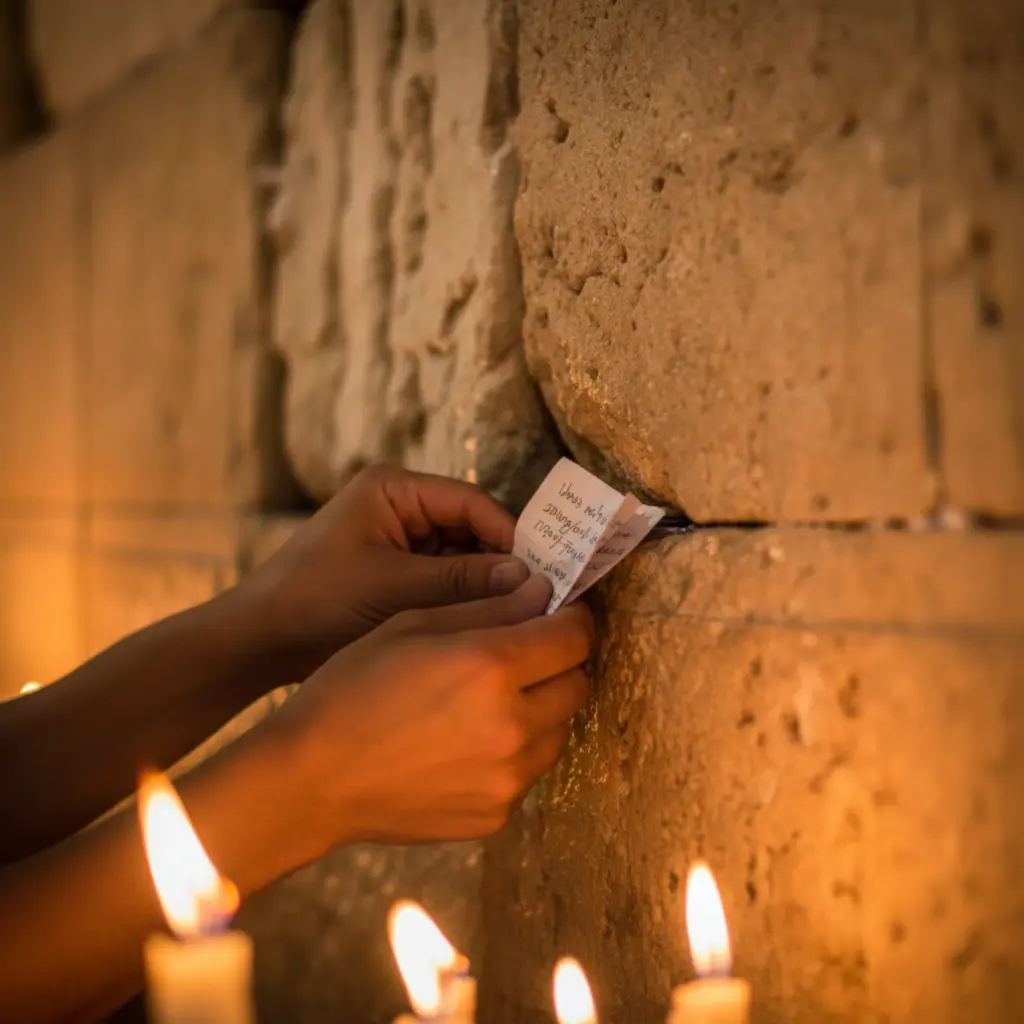
Other / Custom
A personal Priestly Blessing crafted precisely around your intentions and your walk of faith.
Where We Offer the Blessings
We offer personalized blessings from several of Israel’s most sacred sites in tradition and prayer, where multitudes have visited throughout the generations to reflect and connect spiritually. Among our locations are some of the most significant prayer sites in Jerusalem, including Mount of Olives, The Western Wall, the Southern Wall Archaeological Area, and David’s Tomb. In addition to Jerusalem our sites include Shiloh, Hebron, and Mount Ebal, which may be offered only temporarily due to needed military coordination (this involves an additional cost).
Mount of Olives
Mount of Olives is the historic ridge located east of Jerusalem’s Old City, overlooking the Temple Mount and the rest of the cityscape. The site is the oldest Jewish cemetery in the world, in use for over 3,000 years, and contains the graves of the prophets Haggai, Zechariah, and Malachi.
King David often visited Mount of Olives as a place of inspiration and prayer and is described in the Book of Kings as ascending this peak in refuge from his son Absalom, who staged a rebellion in Jerusalem. At that critical moment David climbed the Mount of Olives and immersed himself in prayer. Since then, the mount has been a prominent site of Jewish life and worship.
During the time of the Second Temple, many priests and scholars lived in villages on and around the Mount of Olives. The mount is served as one the main entrance gates for those travelling to Jerusalem for the festivals and was the vantage point from which they saw the Temple for the first time.
The Western Wall
The Western Wall is the primary retaining, ‘west-wall’ of the Second Temple, and is the most accessible section of the former complex. It has been the focus of Jewish prayer for three-millennia and is where visitors have come from around the world to pray and participate in communal blessings.
The location of the Temple is first described in the Book of Genesis when Abraham is returning from rescuing his nephew Lot and defeating the powerful invading five armies. As he comes back from battle Abraham has an encounter with Melchizedek, a king and priest of the ‘Most High God’, located in Salem (Jerusalem). At the meeting Melchizedek brings bread and wine to Abraham, in addition to giving him blessings.
The Temple location is also where Abraham was later was commanded to perform the ‘Binding of Isaac’, that holy area in Jerusalem which Abraham would name ‘Hashem Yireh’, God will see and provide.
The two Temples would then stand on this location for nearly a thousand years. Built by David’s son Soloman in the 10th century CE, the First Temple first stood for 410 years until it was destroyed by the Nebuchadnezzar and the Babylonian empire. After a spiritual and national revival, the Jewish people returned to build the Second Temple, which stood for over another four-centuries.
Today the limestone walls, which were constructed by Herod 2,000 years ago, form a prayer courtyard where its space is always filled with words of praise. Twice yearly a mass ceremony is held during intermediate the days of Passover and Sukkot. Thousands of worshippers gather to receive the Priestly Blessing from hundreds of Kohanim blessing the public, a tradition re-established in 1970.
Southern Wall Archaeological Park (requires paid entry)
The Southern Wall Archaeological Area is an excavated section of the Second Temple complex and include the Robinson’s Arch, which leads to the Temple’s entrance. The archaeological park contains artifacts from both Temple periods and includes the seven southern steps used by the religious pilgrims to enter the Temple complex. Entrance to the park requires a fee.
David's Tomb
The tomb of King David is located on Mount Zion, just south of the Old City, and has long served as a place of prayer and pilgrimage for those seeking spiritual inspiration and connection to David’s legacy.
In addition to its spiritual significance, Mount Zion was the political center of David’s rule, the site of his palace and where his court and administration operated. Some sources suggest that David had planned the construction of the Temple for this location.
Today, the Tomb of David is located on the ground floor of a Crusader-era building, serves as an active synagogue, and is a place for worshippers to pray privately to receive the merit of the great leader.
Shiloh (requires an entry ticket)
The site of Shiloh is identified with the ancient biblical city where the Tabernacle stood for centuries before the First Temple was constructed in Jerusalem. Located in the hill country of the tribe Ephraim, the holy site was used as a place of worship by many great prophets. The site is described in the Book of Samuel, where Hannah would travel twice yearly to pray deeply for a child, and where she was finally blessed to conceive the Prophet Samuel. One year Hannah went to the Tabernacle alone and immersed in fervent prayer, vowing that if God would grant her a son, she would dedicate him to divine service for his entire life. Ever since, the essence of Jewish prayer has been built off this act of authentic supplication by Hannah. Soon afterward, Hannah gave birth to Samuel, whose name means “God has heard.”
The site also temporarily kept the Ark of the Covenant, and where it was later captured by the Philistines in battle. Shiloh was also the residential space for many early judges and leaders of the Jewish people.
Today, the site is open for worshippers to connect with early biblical tradition.
Hebron (offered temporarily)
The city of Hebron is one of the oldest continuously inhabited cities in the region and holds deep significance in Jewish tradition as it contains the graves of the Patriarchs and Matriarchs. Located 19 miles south of Jerusalem, the Field of Machpelah was first purchased by Abraham 3,700 years ago as a burial plot for his wife Sara. Abraham first settled in the area and built an altar to God near the oaks of Mamre, as described in the Book of Genesis. It was here that Abraham received visitors who brought the promise that his family would grow into a great nation. Later, after the death of his wife Sarah, Abraham purchased the Cave of Machpelah, establishing a family burial place. Today this site is known as the Cave of the Patriarchs.
All of the patriarchs and matriarchs are buried here: Abraham and Sarah, Isaac and Rebecca, and Jacob and Leah.
Hebron also played a key role in the life of David. After the death of King Saul, David came to Hebron and is where the tribe of Judah first crowned him king. For several years, Hebron served as the capital of his kingdom before he later moved it to Jerusalem.
The surrounding city has seen Jewish live thrive ever since, and was the site of David’s anointment as King. Due to the security situation and additional coordination, trips to Hebron are offered only at certain times. This option requires a fee.
Mount Ebal (offered temporarily)
Mount Ebal is a mountain in the Samaria region, a spiritual site described in the Books of Deuteronomy and Joshua that is associated with unique blessings and ceremonies. The mount is situated across from Mount Gerizim, and the city of Shechem rests beneath them.
Commanded in the Book of Deuteronomy and later fulfilled in the Book of Joshua, God orders a national covenant ceremony take place between the Mountains Gerizim and Ebal. The former where blessings would be proclaimed and the latter where the curses for breaking the covenant would be declared. Half the tribes of Israel stood on each mountain while the Levites spoke the covenant aloud. This event symbolized Israel’s acceptance of God and his Torah as they began life in the land.
Joshua later built an altar to God exactly as commanded earlier by Moses; made from unworked stones where sacrifices were offered. At the site, the Torah was written on stones and read to the people. At the opening ceremony of the Alter Joshua read the entire law before the people, including men, women, children, and even the foreigners who lived amongst them.
This event is one of the earliest examples of a public national reading of the Bible.
In the 1980s an archeological discovery uncovered an alter on the site that dates to the time of the prophet Joshua. Visits require additional coordination due to security conditions and are therefore only available once annually. This option requires a fee.
Free Blessing
Submit your name to be lifted in prayer- Your name included in a Kohen's prayer
- Mentioned with your mother's name (Jewish tradition)
- Lifted at a sacred site in the Holy Land
- Pure prayer - no recording or documentation
Shared Blessing Video
Group blessing video- 30-second video of a Kohen reciting the blessing
- Your name spoken alongside other registered names
- The power of a wide group blessed together
- Delivered by email
Personal Blessing Video
Your personal Priestly Blessing on video- Short video with introduction and brief explanation
- Kohen recites the Priestly Blessing in person
- Short personal blessing in English (about 2 minutes)
- Certificate with your name in Hebrew, sent by email
Handwritten Parchment
Personalized blessing on parchment- Personalized blessing by a Kohen
- Name written on parchment by a certified Torah scribe
- Prepared with a beautiful design and framing
- Shipped directly to your home
Personal Verse on Parchment
A biblical verse for your name- Biblical verse connected to your name
- Written on parchment by a certified scribe
- Spiritual link between your name and Scripture
- Beautifully prepared keepsake
Premium Prayer Tour
A guided experience in the Holy Land- One-hour guided experience with a Kohen
- Preparation for your prayer
- Priestly Blessing given in person on site
- At the Western Wall or another sacred location
- Explanation about the site and its history
Premium Plus - Mount Ebal
A guided visit to Mount Ebal- Guided visit to Mount Ebal
- Priestly Blessing given on site
- Coordination and permits arranged for you
- Offered on a temporary basis